

Views: 0 Author: Site Editor Publish Time: 2026-01-03 Origin: Site


Welding is a crucial process in Sheet Metal Fabrication, playing a key role in creating durable, reliable joints. But which welding technique is most commonly used for sheet metal, and why? In this article, we will explore the various welding methods available and their advantages. You'll learn how to choose the best technique for your specific needs.
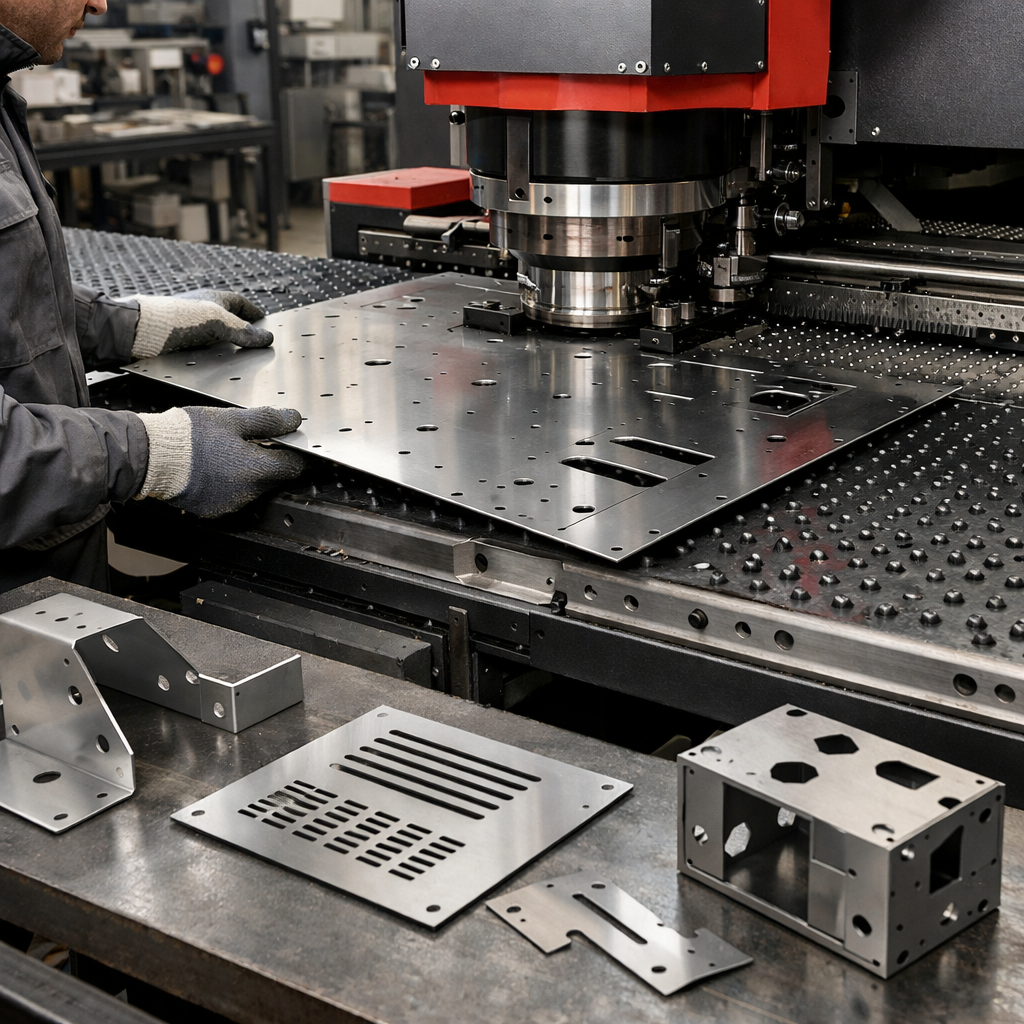
Choosing the appropriate welding technique is essential in sheet metal fabrication, as the right method depends on factors such as material type, thickness, production volume, and joint complexity. Let’s dive into the basics and common techniques used for welding sheet metal.
Sheet Metal Welding refers to the process of joining two or more metal sheets using heat, pressure, or both. The process melts the edges of the sheets, allowing them to fuse together as they cool. Unlike mechanical fastening methods like screws or rivets, welding creates a more permanent, stronger bond, which is crucial for projects requiring durability and tight seals.
Welding vs. Other Joining Methods:
● Welding: Creates permanent, strong, airtight, and watertight bonds. It is ideal for projects requiring a durable and reliable joint.
● Screws/Rivets: These are often used for temporary joints and allow for easy disassembly. While they are strong, they cannot achieve the same level of permanence or sealing capability as welding.
● Adhesives: Adhesive bonding is typically used for lighter applications but lacks the strength and durability of welded joints.
Unlike screws or rivets, which need additional parts like nuts or bolts, welding fuses the pieces directly, eliminating the need for extra components and simplifying the design.
● Suitable Materials & Thicknesses: MIG welding is ideal for welding mild steel, stainless steel, and aluminum, particularly in thick sheet metals.
● Pros: MIG welding is fast, cost-effective, and easy for beginners to learn. The process is flexible and works well with a variety of materials and thicknesses. It also allows for high-speed welding, which is perfect for large-scale production.
● Cons: It may not offer the same precision as other methods like TIG welding. The aesthetic quality of the welds may be lower compared to TIG.
● Typical Applications: MIG welding is commonly used in industries such as automotive manufacturing, heavy equipment, and general metal fabrication where high production rates are essential.
● Suitable Materials & Thicknesses: TIG welding is ideal for welding thin metals like stainless steel and aluminum. It works well with materials requiring high precision.
● Pros: The process produces highly accurate and clean welds. TIG welding is known for its superior finish quality and precision, making it perfect for intricate, fine work.
● Cons: It is slower than MIG welding and requires more expertise, which makes it less suitable for large-scale production.
● Typical Applications: TIG welding is commonly used in aerospace, medical devices, and precision sheet metal fabrication where the weld quality and appearance are critical.
● Suitable Materials & Thicknesses: Spot welding is typically used for thin sheet metals (up to about 3 mm thickness).
● Pros: The spot welding process is fast and highly efficient. It can be easily automated, which makes it a popular choice for mass production. Additionally, it produces minimal distortion and is highly cost-effective for high-volume manufacturing.
● Cons: Spot welding is not suitable for thick metals and does not provide the same weld strength as other techniques like TIG or MIG welding.
● Typical Applications: Spot welding is most commonly used in the automotive industry, where it is employed to weld body panels and other thin metal components. It is also used in appliance manufacturing and sheet metal assemblies.
● Suitable Materials & Thicknesses: Plasma arc welding works well for both thin and thick sheet metals. It is commonly used with stainless steel and aluminum.
● Pros: Plasma arc welding offers high precision, fast speeds, and low heat distortion. It is capable of creating high-quality, strong joints with minimal contamination. This process provides excellent control, making it ideal for welding sensitive materials.
● Cons: Plasma arc welding requires specialized equipment, making it more expensive than MIG or TIG welding.
● Typical Applications: Plasma arc welding is commonly used in industries requiring high precision, such as aerospace, electronics, and heavy equipment manufacturing.
When choosing the right welding technique for sheet metal fabrication, it's essential to consider factors like cost, speed, weld strength, and finish quality. Below is a comparison table of the most common welding techniques:
Welding Technique | Cost | Speed | Weld Strength | Finish Quality |
MIG Welding | Low | High | High | Medium |
TIG Welding | High | Low | Very High | High |
Spot Welding | Low | Very High | Medium | Low |
Plasma Arc Welding | Medium | High | High | Medium |
From the table, we can see that MIG Welding is the most cost-effective, offering high speeds and strength at a lower cost. TIG Welding, although more expensive, provides superior precision and weld quality. Spot Welding excels in mass production scenarios but has limited strength and finish quality.
Each welding method is suited to different materials and sheet metal thicknesses. For thin sheets, methods like TIG welding and plasma arc welding offer better precision and less heat distortion. For thicker materials, MIG welding is often the preferred method, as it is more efficient for high-speed, high-strength applications.
● Mild Steel: Both MIG and TIG welding are suitable for welding mild steel, with MIG being ideal for thicker materials.
● Aluminum: TIG welding is preferred for aluminum, as it offers better control and cleaner welds.
● Stainless Steel: TIG is typically the best choice for thin stainless steel, while MIG can handle thicker sheets.
● Other Materials (e.g., Titanium, Copper): For titanium and reactive metals, TIG welding is often the best choice due to its high precision.
● Small Batch Production: For smaller projects, MIG and TIG welding offer flexibility and precision, especially when customization is required. However, manual labor can increase costs.
● Mass Production: For large-scale production, automated methods like spot welding are the best choice. These methods increase speed and reduce labor costs, making them highly suitable for industries like automotive manufacturing, where thousands of parts need to be welded quickly.
Tip: For high-volume production, consider integrating robotic welding arms and automated systems to streamline your processes and reduce labor costs.
The thickness of the sheet metal is a crucial factor in determining the best welding technique. Thin sheets are more prone to warping or burning through, so processes like TIG welding or plasma arc welding are often preferred for delicate metals. Thicker materials can withstand more heat and are better suited for MIG welding.
● Thin Metals: TIG welding provides the best control and is ideal for thin sheet metals, reducing the risk of burn-through.
● Thick Metals: MIG welding or plasma arc welding are more efficient at handling thicker materials, offering faster results.
Tip: Always choose the welding method based on the material’s thickness to prevent burn-through and distortion.
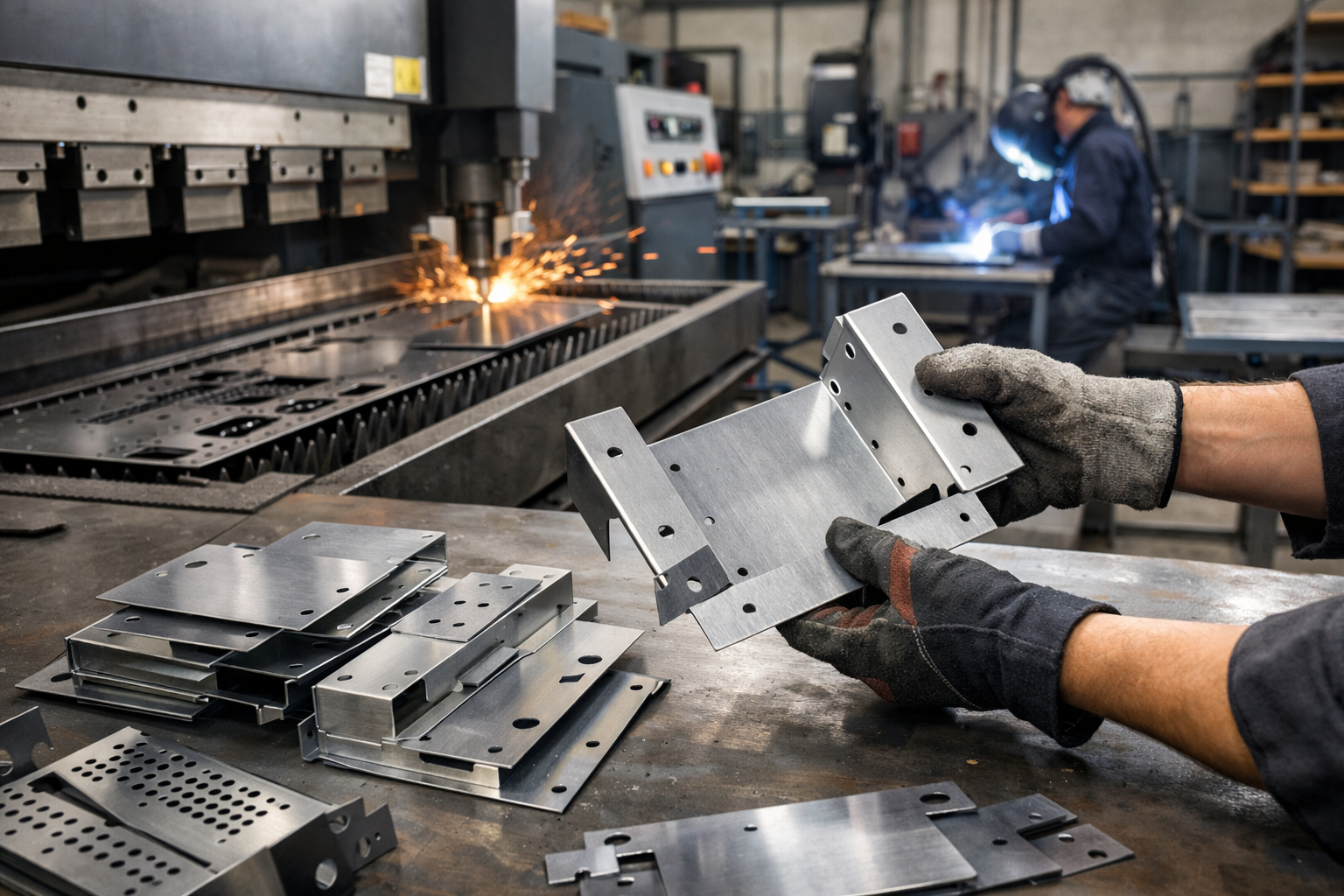
Different joint designs require different welding methods. For instance, TIG welding is perfect for intricate joints like butt or corner joints, where high precision is required. On the other hand, MIG welding works well for simple lap joints and is faster, making it suitable for mass production.
● Butt Joints: TIG welding excels due to its ability to deliver precise, strong welds.
● Lap Joints: MIG welding or spot welding is suitable, providing fast, reliable welds.
● Corner Joints: TIG welding is optimal for corners due to its precision.
The volume of production plays a significant role in determining the most suitable welding technique. MIG welding is a cost-effective choice for medium-volume production, while spot welding is more cost-effective for high-volume manufacturing, especially when automation is used.
Choosing the right welding technique is crucial for successful Sheet Metal Fabrication. MIG, TIG, and Spot Welding are the most common methods, each offering unique advantages. MIG is ideal for high-speed production, TIG provides precision for thin materials, and Spot Welding excels in mass production. For optimal results, selecting the right welding service is essential. Dongguan Longwang Hardware Co., Ltd. offers high-quality welding solutions, providing durable and precise joints to meet your fabrication needs.
A: Sheet Metal Fabrication involves shaping metal sheets into specific forms. Welding is essential as it creates strong, permanent joints, making it ideal for projects requiring durability and precision.
A: The most common techniques include MIG, TIG, and Spot Welding. MIG is fast, TIG offers high precision, and Spot Welding is efficient for mass production.
A: TIG welding provides better control over heat, ensuring clean, precise welds on thin metals, which is crucial for Sheet Metal Fabrication.
A: MIG welding is more affordable and faster, making it suitable for larger projects. TIG welding, while more expensive, offers better precision and quality for finer details.
A: Spot Welding is automated, fast, and cost-effective, making it ideal for high-volume production in Sheet Metal Fabrication. It is commonly used in industries like automotive manufacturing.


