

Views: 0 Author: Site Editor Publish Time: 2026-01-10 Origin: Site


Have you ever wondered how complex metal parts are produced so efficiently? Sheet Metal Stamping is a key process in modern manufacturing that allows for the rapid creation of precise metal components. In this article, we will explore the various applications of Sheet Metal Stamping and its significance across industries like automotive, aerospace, and medical devices. You'll discover how this process helps businesses save time and costs while maintaining high precision and quality.
Sheet metal stamping is a cold-forming manufacturing process used to transform flat metal sheets into desired shapes and components. It involves applying pressure through a stamping press, using tools and dies to shape the metal into predefined forms. The process is versatile, capable of producing complex shapes with tight tolerances and high efficiency.
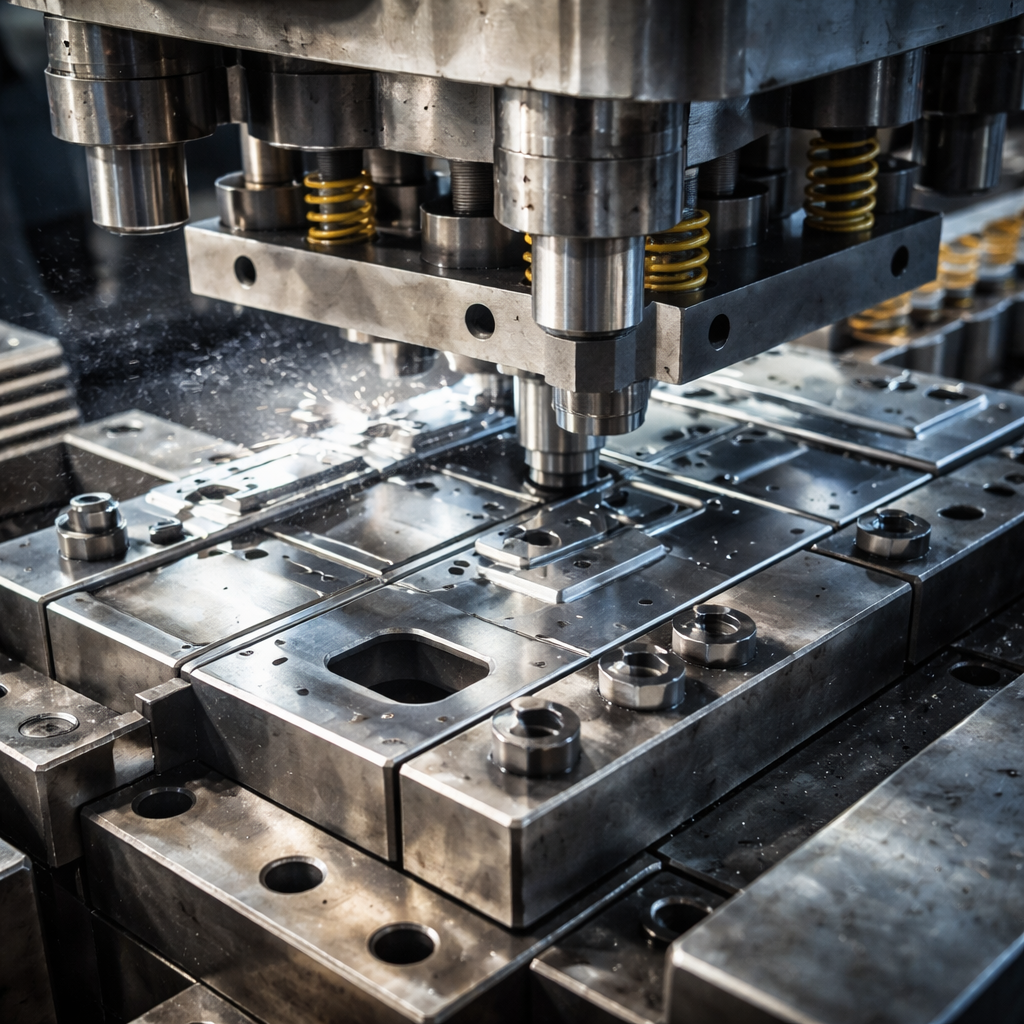
Key Techniques Used in Stamping
● Sheet metal stamping uses several techniques to shape the metal, including:Punching: Creating holes or slots by using a punch and die.
● Cutting: Removing excess material to form a specific shape.
● Bending: Folding the metal to create angles or curves.
● Coining: Compressing the metal between dies to create detailed features and smooth edges.
The sheet metal stamping process starts with placing a flat metal sheet between a punch and a die in a stamping press. The punch applies significant pressure to the metal, forcing it into the shape of the die. This process is repeated for each stage until the desired part is formed.
The Role of Tools and Dies
The tools and dies play a crucial role in shaping the metal. The die holds the sheet metal in place, while the punch deforms it into the desired shape. A properly designed die ensures accuracy and minimizes material waste.How Pressure Machines Shape Metal
Pressure machines use hydraulic or mechanical force to press the metal through various stages of forming, cutting, or bending. These machines are capable of applying extreme pressure, which allows the material to flow into the die and form intricate shapes with precision.
Sheet metal stamping plays a pivotal role in the automotive industry, where it is used to manufacture a wide range of car body parts, engine components, and other critical pieces. The ability to produce components with intricate designs and tight tolerances is vital for ensuring parts fit together seamlessly in automotive assemblies.
Advantages
● High Efficiency: Stamping allows manufacturers to produce large volumes of parts quickly, which is crucial in the high-demand automotive industry.
● Precision: The stamping process guarantees tight tolerances, ensuring that automotive components fit together exactly as needed. This precision is essential for the assembly of safety-critical components like airbags and seatbelt mounts.
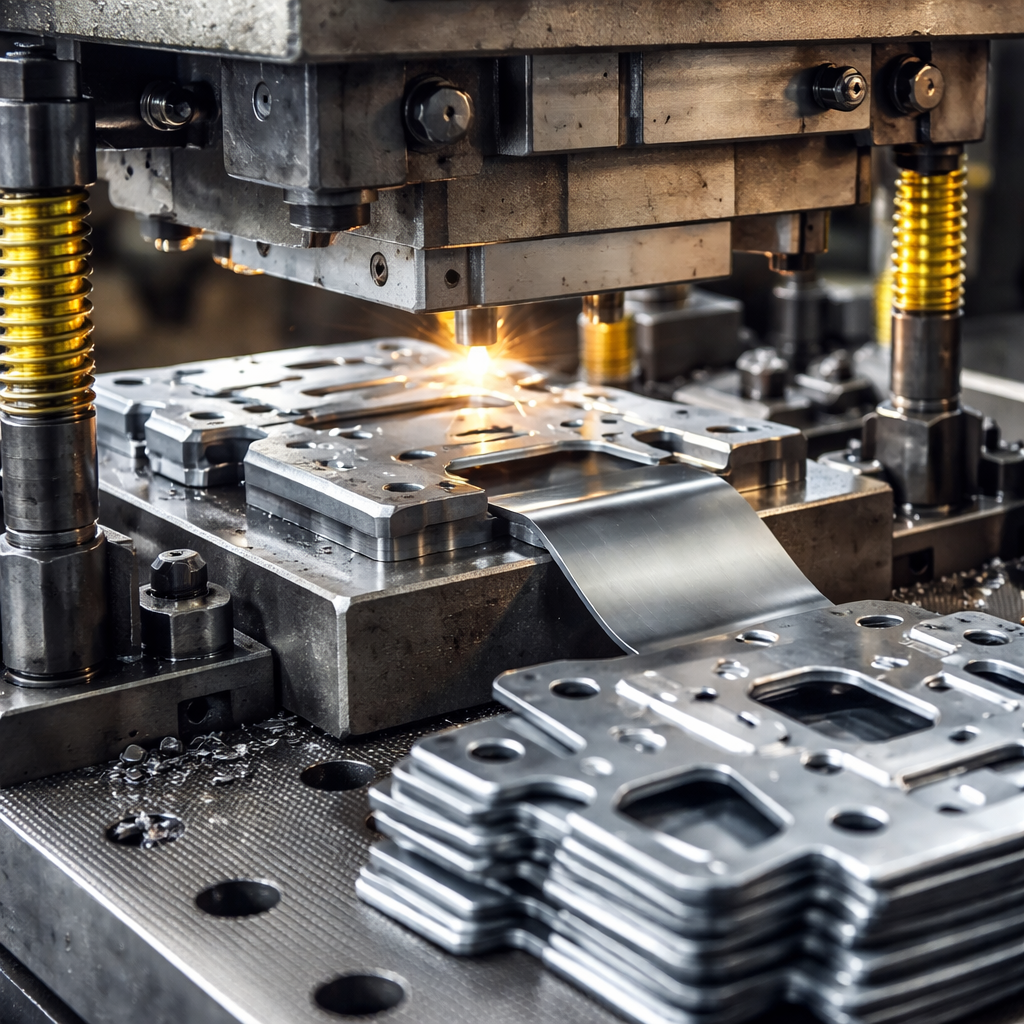
Common Automotive Components Produced
● Car body panels (e.g., doors, hoods, fenders)
● Engine parts (e.g., valve covers, pistons)
● Chassis components (e.g., brackets, supports)
● Exhaust system parts
The aerospace industry relies heavily on sheet metal stamping to create lightweight, yet strong and durable components. Parts such as aircraft wings, fuselages, and landing gear are commonly produced using stamping techniques. These parts must meet rigorous safety and performance standards, requiring the use of precise and reliable manufacturing processes.
Advantages
● High Strength-to-Weight Ratio: Aerospace components need to be lightweight without compromising on strength. Sheet metal stamping provides a high strength-to-weight ratio, which is essential for maintaining the performance of aircraft and spacecraft.
● Durability: The components produced by stamping can withstand extreme conditions, including high pressures, temperatures, and the harsh environments that are common in aerospace applications.
Common Aerospace Components Produced
● Aircraft wings and panels
● Landing gear parts
● Brackets and fasteners
● Instrument panels
In the medical device industry, sheet metal stamping is a critical process for producing parts used in surgical tools, medical sensors, and other high-precision devices. The ability to create components with high accuracy and durability is crucial in applications where safety and reliability are paramount.
Advantages
● Precision: The medical industry requires components that meet strict tolerances. Sheet metal stamping ensures the accuracy needed for medical devices like surgical instruments and diagnostic equipment.
● Durability: Parts made from stamped sheet metal are resistant to wear and tear, which is essential for devices that must function reliably over long periods.
Common Medical Components Produced
● Surgical instruments (e.g., forceps, scalpels)
● Medical sensor housings
● Implantable devices (e.g., stents, pacemaker housings)
● Diagnostic equipment components (e.g., electrode holders)
The electronics industry benefits from sheet metal stamping by enabling the production of small, complex components like battery enclosures, connectors, and heat sinks. As electronic devices become more compact and feature-rich, manufacturers rely on sheet metal stamping for high-speed, high-precision production.
Advantages
● Complex Shapes: Sheet metal stamping can produce intricate and detailed shapes required in electronics, such as connector pins and housings that fit precise layouts in devices.
● Fast Production: In the fast-paced electronics industry, speed is critical. Stamping allows for rapid production of components, making it ideal for the large-scale, high-demand production of items such as smartphones, computers, and consumer electronics.
Common Electronic Components Produced
● Battery enclosures and cases
● Connectors and terminals
● Heat sinks and cooling components
● Housing for circuit boards
This technique involves passing a metal strip through several stamping stations, each performing a different operation like punching, cutting, or bending. Progressive die stamping is highly efficient for producing large quantities of parts with repetitive shapes.
Fourslide stamping uses four slides to shape the metal in various directions. This technique is particularly useful for producing complex shapes that require multiple bends and twists in a single cycle.
Deep draw stamping is used for creating deep, hollow parts from sheet metal. The process draws the metal into a die cavity using a punch. This technique is ideal for creating components that require a high depth-to-diameter ratio, such as automotive parts or kitchenware.
Designing the tools for sheet metal stamping requires precision. CAD (Computer-Aided Design) and CAM (Computer-Aided Manufacturing) software are used to create detailed designs and simulations, ensuring that every part fits perfectly and meets specifications.
The selection of dies and punches is critical for ensuring the success of the stamping process. The right tooling helps reduce material waste, improve efficiency, and maintain high-quality standards throughout production.
Various metals are used in sheet metal stamping, each offering unique properties that suit different applications. Common materials include:
Material | Properties | Common Applications |
Steel | Strong, durable, cost-effective | Automotive, industrial machinery |
Aluminum | Lightweight, corrosion-resistant | Aerospace, electronics |
Copper | Excellent electrical conductivity | Electrical connectors, relays |
Stainless Steel | Corrosion-resistant, durable | Medical devices, food processing |
When choosing the right material for stamping, it is important to consider:
● Strength: The material should be strong enough to withstand the forming process and the stresses it will face in use.
● Corrosion Resistance: For parts exposed to harsh environments, choosing a corrosion-resistant material is essential.
● Formability: The material should be ductile enough to be easily formed without cracking or breaking.
The choice of stamping presses and dies depends on the complexity and volume of the parts being produced. Different presses, such as mechanical presses, hydraulic presses, or servo presses, offer various capabilities and are suited for specific types of stamping work.
● Efficiency and Precision: Sheet metal stamping produces high volumes of parts with tight tolerances, which is crucial for industries requiring consistent, high-quality components.
● Cost-Effectiveness: Once the initial tooling is created, the cost per part decreases significantly, making stamping ideal for mass production.
● Versatility: Sheet metal stamping can produce a wide range of shapes and sizes, from simple components to highly intricate designs.
● High Initial Setup Costs: The cost of designing and manufacturing tooling can be high, especially for custom or complex parts.
● Material Waste: Although stamping is efficient, there can still be material waste, especially if the design doesn't optimize the use of the metal sheet.
● Limited to Thin Metal Sheets: Sheet metal stamping is generally suited for thin materials, and may not be suitable for thick or very hard metals.
Sheet metal stamping is essential in modern manufacturing, offering efficiency and precision across industries like automotive, aerospace, and medical devices. It allows for the production of complex components with tight tolerances. As the demand for high-quality, cost-effective production grows, businesses should consider sheet metal stamping. Companies like Dongguan Longwang Hardware Co., Ltd. provide high-quality stamped parts, ensuring durability and precision, which help clients optimize their manufacturing processes.
A: Sheet metal stamping is a manufacturing process that uses tools and dies to shape flat metal sheets into desired parts. It is widely used in industries like automotive, aerospace, and medical devices.
A: Sheet metal stamping works by placing a metal sheet between a punch and die, then applying pressure to form the material into a specific shape. This process allows for mass production of high-precision parts.
A: Sheet metal stamping is ideal for creating high-volume, precision parts needed in the automotive industry, such as body panels and engine components. Its efficiency and accuracy ensure quality production.
A: Sheet metal stamping offers high efficiency, precision, and cost-effectiveness. It is capable of producing complex shapes with tight tolerances, making it ideal for large-scale manufacturing.
A: The cost of Sheet Metal Stamping depends on factors like material type, complexity, and production volume. Typically, it is cost-effective for large runs but may have higher initial tooling costs.
A: Materials like steel, aluminum, copper, and stainless steel are commonly used in Sheet Metal Stamping. The choice depends on the part's application, required strength, and environmental conditions.


