

Views: 0 Author: Site Editor Publish Time: 2026-01-09 Origin: Site


Have you ever wondered how the parts in your car or electronic devices are made? The answer often lies in the Sheet Metal Stamping process. This highly efficient manufacturing method shapes metal sheets into precise components used in a variety of industries.
In this article, we will explore what Sheet Metal Stamping is and why it plays such a crucial role in modern production. You’ll learn about the key steps, advantages, and challenges involved in this process.
Sheet metal stamping is a manufacturing process used to shape flat sheets of metal into specific shapes. This process uses a combination of pressure and tooling to transform the metal into the desired form. It’s commonly used in industries like automotive, electronics, and medical equipment, where precision and efficiency are crucial.
In essence, sheet metal stamping is a cold-forming process, which means no heat is used. Instead, force is applied through a press, making it efficient for high-volume production. The process is fast and cost-effective, especially when producing parts in large quantities. This is why sheet metal stamping is favored for manufacturing components like automotive body parts, electronic enclosures, and medical devices.
Tip: If you need large volumes of precision parts, sheet metal stamping could significantly reduce production costs and time.
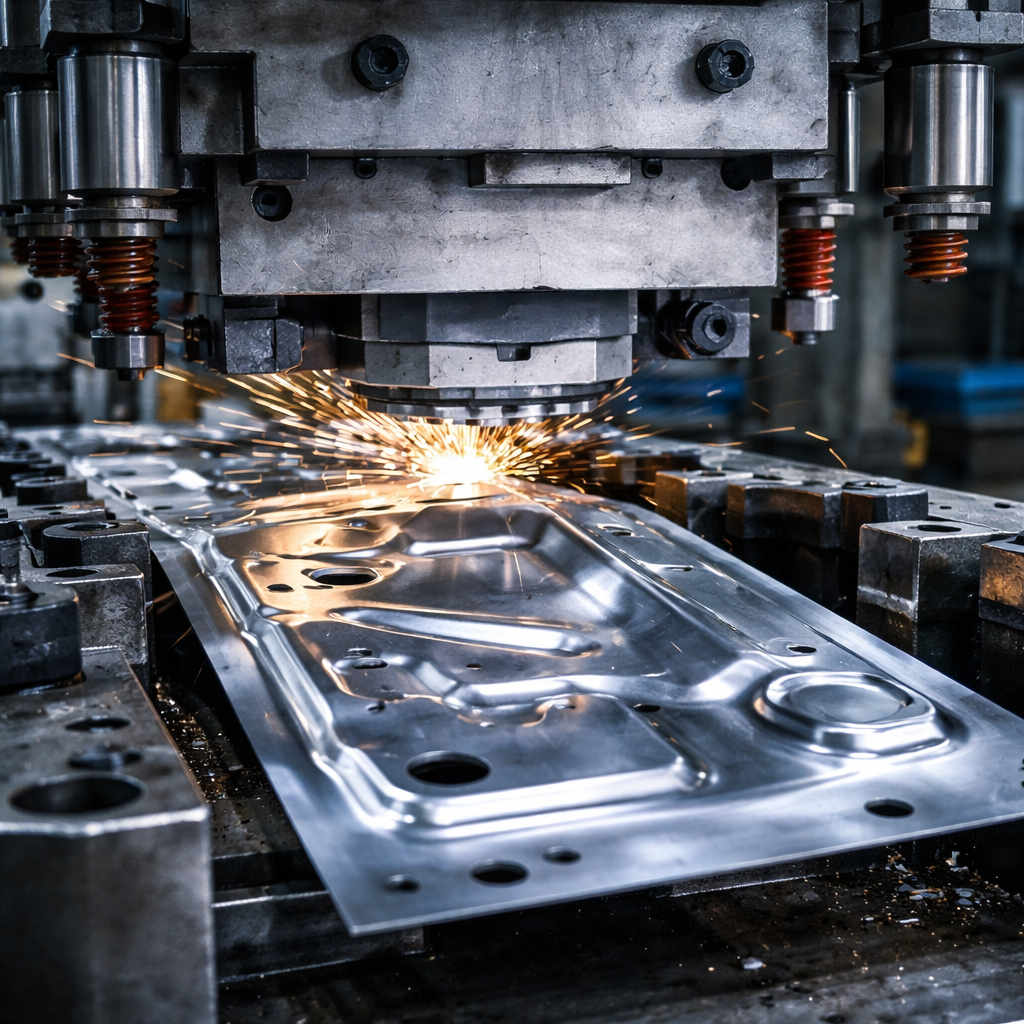
The sheet metal stamping process relies on three key components to achieve the desired shape:
● Sheet Metal: This is the flat metal material that undergoes the stamping process. The metal sheets can vary in thickness and material type, such as steel, aluminum, or brass.
● Dies: A die is a tool used to shape or cut the metal. It’s mounted onto the press machine, where it receives the metal sheet and applies force to shape it.
● Press Machines: These machines are the powerhouses of the stamping process. They apply the necessary force to the die to shape the metal into the desired form. There are various types of press machines depending on the complexity and scale of production.
These components work in tandem to produce a wide variety of metal parts, from simple shapes to more complex, intricate designs.
Blanking is the first step in the stamping process. During blanking, the metal sheet is fed into the press, where the die cuts out the desired shape from the larger metal sheet. The cut piece is known as a blank. This blank may be the final product or may undergo further steps like piercing, drawing, or bending.
Punching and piercing are processes used to create holes or slots in the metal sheet. In punching, a punch head pushes the material into the die, creating a hole. Piercing is similar, but the focus is on cutting away material to form the hole, rather than saving the punched material.
These processes are crucial for creating functional holes in parts, such as mounting holes or ventilation openings, which are often found in automotive and electronic components.
Bending is the process of shaping the metal by applying force to create angles, curves, or other complex shapes. The metal sheet is placed on a die, and pressure is applied to bend it into the desired shape. This process is commonly used for parts like brackets, frames, and enclosures.
Bending can be done in several ways, including air bending, bottoming, or coining, depending on the part’s complexity and material.
Note: Bending too sharply or improperly can cause the metal to crack, so it’s important to ensure that the bending radius is appropriate for the material thickness.
Drawing is a process used to create deep, hollow, or complex shapes, such as deep pans, cups, or boxes. The metal sheet is drawn into a die cavity using a punch, which stretches the material into the desired shape.
Deep drawing is often used for producing components that need a high depth-to-width ratio, such as cooking equipment or automotive components.
Dies play a critical role in sheet metal stamping. They are the tools that shape and cut the metal during the stamping process. Dies can be custom-made to achieve the exact shape and size needed for a particular component. They come in various forms, such as:
● Single-station dies: These perform one operation at a time.
● Multi-station dies: These perform multiple operations in a single stroke, increasing efficiency.
Custom dies ensure that manufacturers can produce parts with tight tolerances and complex shapes, which is essential for high-quality production.
Type of Press Machine | Description |
Mechanical Presses | Driven by flywheels, ideal for high-speed, high-volume production. They apply large force with rapid cycles, making them suitable for simple parts and large runs. |
Hydraulic Presses | Use hydraulic fluid to generate pressure, providing more control over the force. Slower than mechanical presses but suitable for producing deeper or more complex shapes. |
Servo Presses | Hybrid between mechanical and hydraulic presses, offering the speed of mechanical presses and the precision of hydraulic presses. Ideal for high-precision and customizable applications. |
Sheet metal stamping offers several advantages that make it a preferred choice in manufacturing:
● High Precision: Stamping allows for the production of parts with tight tolerances, ensuring consistency and high quality.
● Cost-Effectiveness: Once the die and press setup are in place, the cost per unit decreases, making it ideal for large-volume production.
● Speed: The stamping process is fast, enabling the production of thousands or even millions of parts in a short period.
● Material Flexibility: Sheet metal stamping can be done with various materials, including steel, aluminum, brass, and copper.
These benefits make it an ideal process for industries like automotive, aerospace, and electronics.
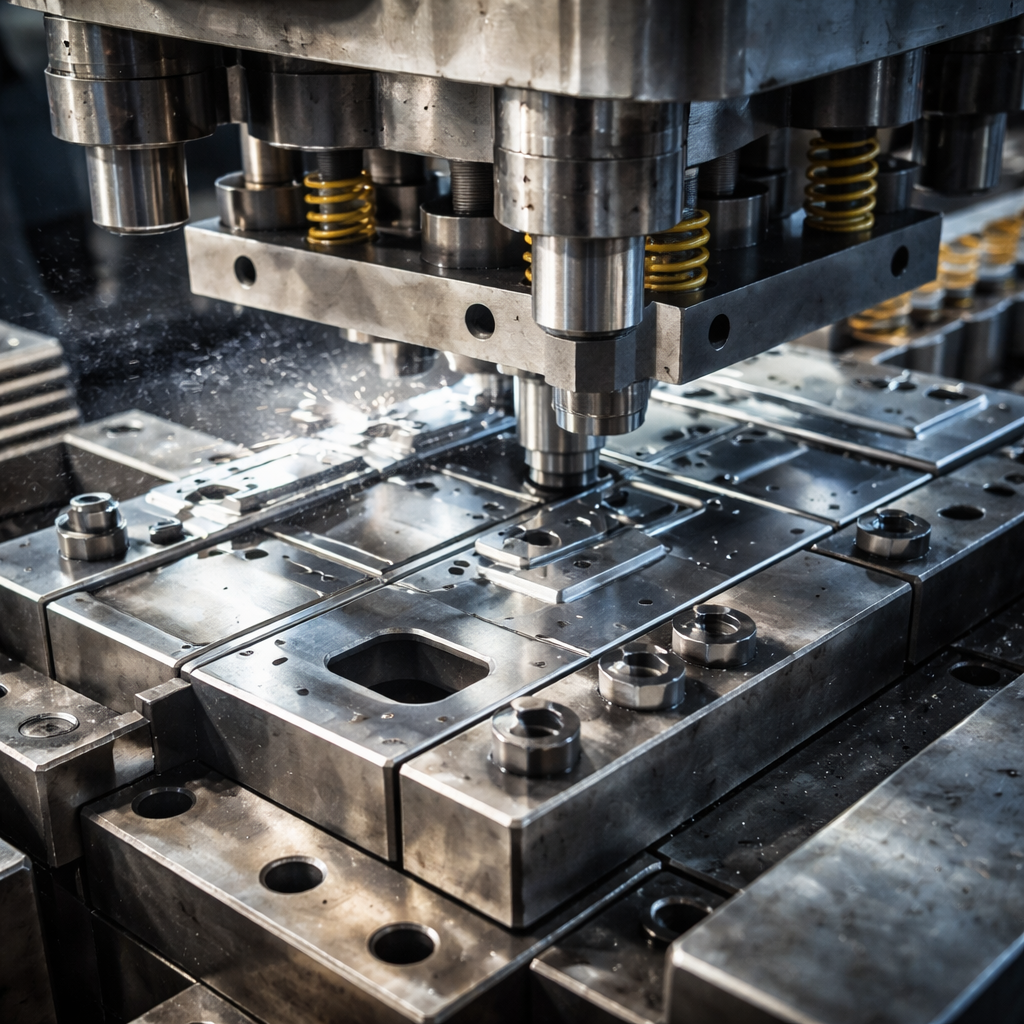
While there are many benefits, sheet metal stamping also faces challenges, including:
● High Initial Setup Costs: The cost of tooling (dies and press machines) can be expensive, especially for small batches.
● Die Wear: Over time, dies can wear out, leading to decreased precision and part quality.
● Material Limitations: Some materials may not be suitable for stamping, requiring careful selection of materials based on the desired properties.
Note: Proper maintenance and die management can help mitigate some of the challenges associated with sheet metal stamping.
In the automotive industry, sheet metal stamping is used extensively for producing car body parts, chassis components, and other structural elements. The high-speed nature of stamping makes it ideal for mass production of car parts that require precision and strength.
For example, stamped parts such as fenders, door panels, and bumpers are commonly produced using sheet metal stamping processes.
Sheet metal stamping is also vital in the production of enclosures, connectors, and other components for electronics. The precision and cost-effectiveness of the stamping process ensure that high-quality parts are produced in large quantities, which is essential for electronics manufacturers.
For instance, enclosures for computers or cell phones are often made through sheet metal stamping.
In the medical industry, sheet metal stamping is used to create parts for medical devices that require both high precision and reliability. Components like surgical instruments, implants, and housings for medical equipment are commonly produced using this method.
The Sheet Metal Stamping process is vital for producing precise, high-quality parts used in industries like automotive, electronics, and medical devices. It offers significant advantages, such as speed, cost-effectiveness, and versatility. Dongguan Longwang Hardware Co., Ltd. stands out with its advanced stamping technology, providing high-precision components that meet industry demands. Their products offer excellent value, ensuring reliability and efficiency for various manufacturing needs.
A: Sheet Metal Stamping is a manufacturing process that uses pressure to shape metal sheets into specific forms. It is widely used in industries like automotive, electronics, and medical devices for producing high-precision parts.
A: Sheet Metal Stamping involves feeding a metal sheet into a press, where a die applies force to cut, shape, or form the metal. The process includes steps like blanking, punching, and bending.
A: Sheet Metal Stamping offers benefits such as high precision, cost-effectiveness for large-volume production, and the ability to work with various metals. It’s ideal for creating complex parts efficiently.
A: Sheet Metal Stamping is used in automotive manufacturing for creating essential parts like body panels, brackets, and engine components. It provides the precision and strength required for these critical parts.
A: Some challenges in Sheet Metal Stamping include high initial setup costs, die wear over time, and the need for precise material selection to prevent defects in the final product.


