

Views: 0 Author: Site Editor Publish Time: 2026-01-16 Origin: Site


Laser cutting has revolutionized the sheet metal industry. With its precision and speed, it's the go-to method for complex cuts.
In this article, we’ll explore the process of laser cutting and why it’s so effective for sheet metal fabrication. You’ll learn about its components, types, advantages, and applications across various industries.
Laser cutting is a precision process that uses a concentrated beam of light (laser) to cut through sheet metal. The laser beam generates intense heat, which either melts, vaporizes, or blows away the material, depending on the setup. This non-contact method ensures high precision, minimal material distortion, and makes it ideal for intricate designs and complex cuts.
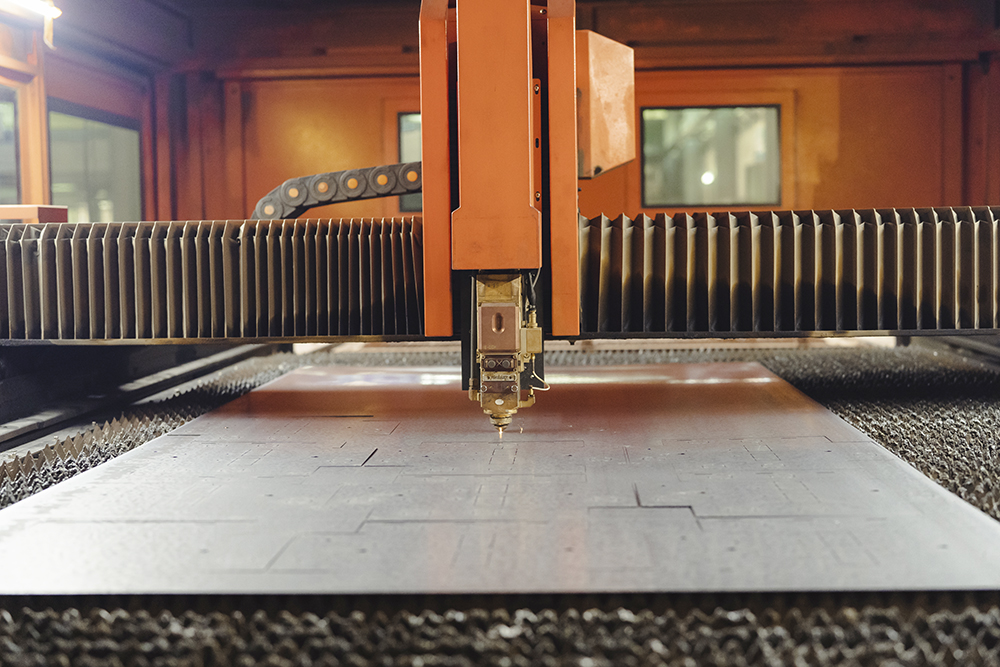
Laser cutting involves focusing a laser beam onto a sheet metal surface. The beam is produced by a laser resonator, which emits a high-powered light. As the beam contacts the metal, the heat generated melts or vaporizes the material. The molten material is removed by a high-pressure assist gas, leaving behind a clean and precise cut.
Laser cutters are typically controlled by a computer numerical control (CNC) system. This system guides the laser beam along a predefined path based on the design, allowing it to execute intricate cuts with tight tolerances. The precision offered by CNC-controlled lasers results in highly detailed parts with excellent edge quality.
To ensure effective and efficient cutting, a laser cutting system consists of several essential components, each playing a critical role in the overall performance of the machine. Below is a breakdown of the key components involved in the laser cutting process:
Component | Description | Role |
Laser Resonator | The source of the laser beam. The resonator amplifies light and generates a high-powered laser. | It produces the light that is focused onto the material for cutting. |
Cutting Head | Contains the lenses and optics that focus the laser beam onto the material surface. | Ensures precision by focusing the laser beam with high accuracy onto the material. |
CNC Controller | A computer-controlled system that directs the movements of the laser head based on the design file. | It controls the cutting process, enabling intricate and detailed cuts with tight tolerances. |
Assist Gas Delivery System | Supplies gases like oxygen, nitrogen, or air to aid in the cutting process. | Helps clear molten material from the cutting area, ensures clean cuts, and reduces oxidation. |
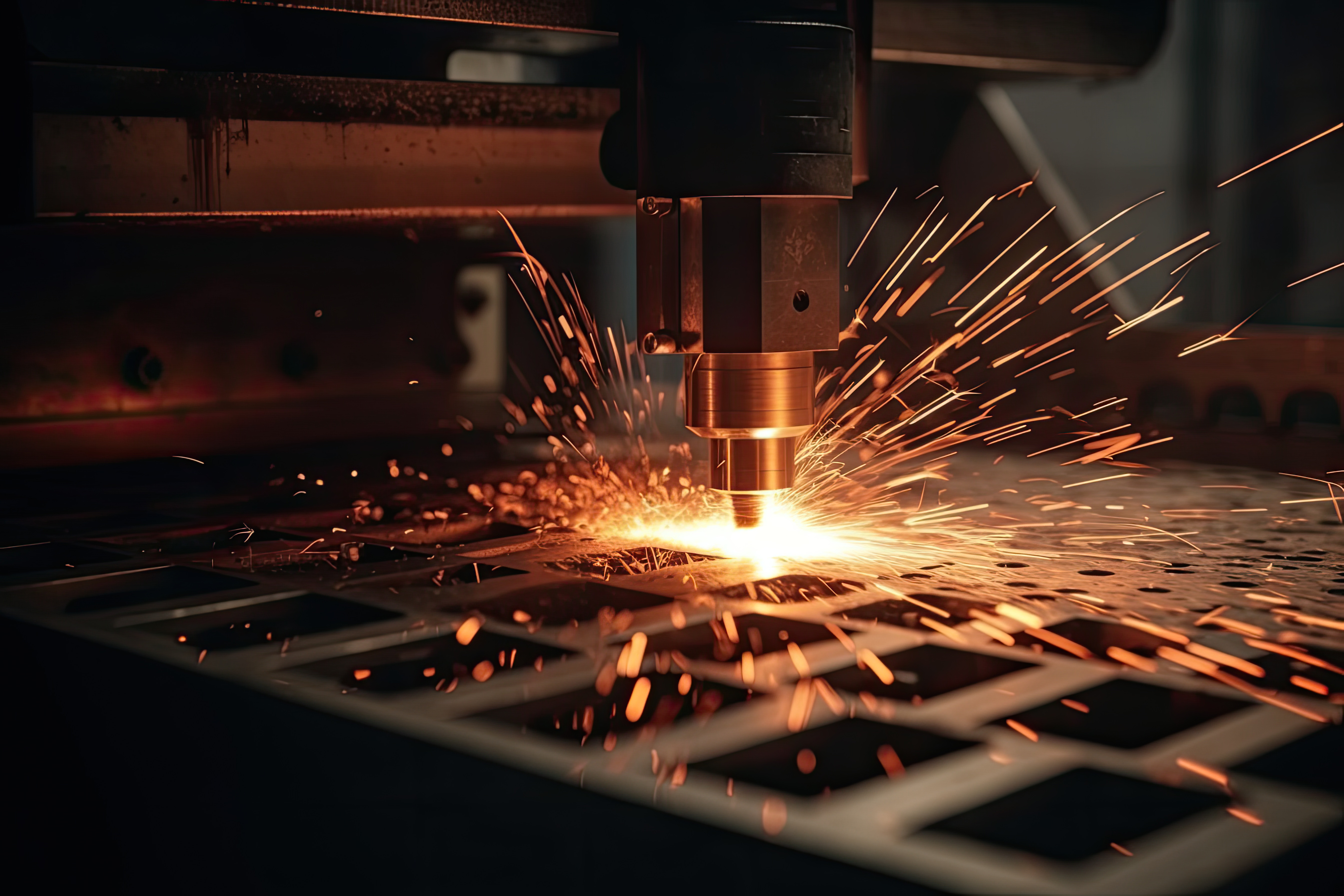
Fiber lasers use a solid-state laser system that generates a powerful and highly focused beam. This type of laser is known for its precision, speed, and energy efficiency. Fiber lasers are ideal for cutting thin to medium thickness metals, such as stainless steel, aluminum, and titanium. They are also highly durable, with a lifespan of over 25,000 hours, making them suitable for high-volume manufacturing.
CO2 lasers are one of the most commonly used types in the sheet metal cutting industry. These lasers use a gas mixture of carbon dioxide, nitrogen, and helium to generate a high-powered beam. While CO2 lasers are effective for cutting non-metals and some thin metals, they are not as efficient for cutting reflective metals like copper and brass. CO2 lasers are generally more affordable but less energy-efficient than fiber lasers.
Crystal lasers, including Nd:YAG (Neodymium-doped Yttrium Aluminum Garnet) lasers, are used for high-power, precision applications. These lasers are particularly suited for cutting thicker metals and materials that require a higher level of energy. However, crystal lasers are typically more expensive and have a shorter operational lifespan compared to fiber lasers.
Fusion cutting is one of the most common methods for laser cutting sheet metal. It uses an inert gas such as nitrogen to blow away the molten material from the cut area. This method prevents oxidation and ensures a clean, smooth cut edge. Fusion cutting is often used for thin to medium gauge metals, particularly for parts requiring high visual quality with minimal post-processing.
Flame cutting involves using oxygen as the assist gas. The oxygen reacts with the material, creating an exothermic reaction that accelerates the cutting process. This method is best suited for cutting mild steel, where the high energy input helps to speed up the cutting time. Flame cutting results in a slight oxidation of the cut edge, which may require additional finishing in some applications.
Sublimation cutting is a slower but highly precise method that uses the laser to vaporize parts of the material with minimal melting. In this process, inert gases like nitrogen, argon, or helium are used to ensure a clean cut with no oxidation. This method is preferred for producing high-precision parts, especially when fine detail is crucial.
Laser cutting offers exceptional accuracy, capable of achieving tolerances as tight as ±0.003 mm. This precision allows manufacturers to produce highly detailed and intricate designs, making it ideal for industries like aerospace and automotive, where precision is paramount.
Unlike traditional cutting methods, laser cutting has a narrow kerf (the width of the cut), meaning less material is wasted. This efficiency makes laser cutting cost-effective for projects requiring complex shapes or large volumes of parts, as more parts can be made from a single sheet.
Laser cutters are highly versatile, capable of cutting a variety of materials such as stainless steel, aluminum, and copper. In addition to cutting, they can also perform tasks like engraving, etching, and drilling, all using the same machine.
Compared to traditional mechanical cutting methods, laser cutting consumes less energy. The efficient use of power, especially in fiber lasers, makes this method more sustainable for long-term production runs.
As a non-contact process, laser cutting minimizes material deformation and contamination. The laser beam doesn’t physically touch the material, reducing wear and tear on the equipment and improving the quality of the finished product.
The initial cost of laser cutting machines can be high, particularly for high-power systems like fiber lasers. This investment might not be feasible for small businesses or startups, though it can be justified by the speed and precision the technology offers for large-scale production.
While laser cutting is highly efficient for thin and medium-thickness metals, it has limitations when it comes to cutting thicker materials. For example, cutting metal thicker than 25 mm may require alternative methods like plasma cutting or waterjet cutting.
Laser cutting requires assist gases like nitrogen, oxygen, or air, which can add to the operating cost. Additionally, the process generates fumes and heat, which necessitates adequate ventilation and safety measures to protect operators.
Laser cutting is commonly used in the automotive industry to create parts such as engine components, chassis, and body panels. Its precision allows for the production of complex shapes that are essential in the modern automotive manufacturing process.
In aerospace manufacturing, laser cutting is used to produce lightweight and high-strength components. These parts must meet strict tolerances to ensure the safety and efficiency of aircraft and spacecraft, making laser cutting the ideal method for the job.
Laser cutting is also utilized in the production of medical instruments and precision components. Its ability to cut with high accuracy makes it ideal for creating the intricate details required in surgical tools and medical devices.
The type and thickness of the material being cut significantly impact the cutting process. Thicker materials require higher laser power, which can affect the cutting speed and the final cut quality. For instance, thicker metals may have a higher chance of developing rough edges or requiring additional post-processing.
The laser power and cutting speed are directly related to the quality of the cut. Higher power allows for faster cutting but can affect the finish quality. Slower cutting speeds may result in smoother edges but can increase the overall production time.
The type of assist gas used, as well as the pressure at which it is applied, can influence the final cut quality. For example, using oxygen can accelerate cutting but may result in a rougher edge. Nitrogen, on the other hand, provides a cleaner cut with minimal oxidation.
Laser cutting plays a crucial role in modern sheet metal fabrication. It offers high precision, efficiency, and versatility, making it a popular choice across industries. As technology advances, we can expect laser cutting to become even more accessible and cost-effective.
At Dongguan Longwang Hardware Co., Ltd., our laser cutting services offer exceptional quality and precision. Our advanced machinery ensures that each project meets the highest standards, providing value to businesses looking for reliable metalworking solutions.
A: Laser cutting in sheet metal is a process that uses a focused laser beam to cut, melt, or vaporize metal. It provides high precision and minimal material distortion, making it ideal for intricate designs.
A: Laser cutting involves focusing a laser beam onto sheet metal. The heat from the laser either melts or vaporizes the material, which is then removed by assist gas, leaving clean cuts.
A: Laser cutting offers high precision, speed, and minimal material waste. It’s ideal for complex designs and works with various metals, making it versatile for multiple industries.
A: Laser cutting in sheet metal fabrication ensures precise cuts and smooth edges. It’s faster, more efficient, and capable of producing intricate shapes that traditional cutting methods can't achieve.
A: The cost of laser cutting for sheet metal depends on material thickness, type, and the complexity of the design. Generally, it’s more cost-effective for mass production due to its precision and efficiency.
A: Laser cutting can be used for thicker sheet metal, but the process becomes slower and less efficient as material thickness increases. Alternative methods like plasma cutting may be preferred for very thick materials.


