

Views: 0 Author: Site Editor Publish Time: 2026-03-11 Origin: Site


Sheet metal fabrication plays a vital role in various industries, including aerospace, automotive, and electronics, by transforming flat metal sheets into precise parts through cutting, bending, and assembling. The design phase is critical to the success of this process, yet many designers make common myths and mistakes that can negatively impact production efficiency, material costs, and product quality. These errors often result from misunderstandings about material selection, bending limitations, hole placement, and assembly considerations. By addressing these misconceptions early in the design process, manufacturers can enhance production efficiency, reduce costs, and ensure that the final products meet the required specifications and high-quality standards.
Sheet metal fabrication is a versatile and widely used process across many industries, including aerospace, automotive, electronics, and construction. The accuracy and precision of the design phase play a significant role in determining the success of the entire fabrication process.
Understanding the potential mistakes during the design phase and addressing them early can help avoid costly errors, delays, and inefficiencies. This article will focus on the most common design myths and mistakes associated with sheet metal fabrication and provide solutions to enhance design and manufacturing processes.
One of the most common myths in sheet metal fabrication is the belief that metal thicknesses can be chosen arbitrarily without affecting the overall design. In reality, the thickness of the material significantly impacts the manufacturing process, including cutting, bending, and welding.
Material Thickness | Effect on Cutting | Effect on Bending | Effect on Cost |
Thin (< 0.5mm) | Easier to cut, faster | Limited bending radius | Lower cost |
Medium (0.5mm - 3mm) | Moderate difficulty | Standard bending radius | Moderate cost |
Thick (> 3mm) | Slower cutting, more wear | More difficult bending | Higher cost |
Material Strength: Thicker metals are typically stronger and more durable, but they require more power to cut and form.
Bending Limitations: Thicker metals can be harder to bend, leading to potential issues with the precision of the final shape.
Cost Implications: Heavier and thicker materials cost more, and excessive thickness may unnecessarily increase material costs.
It's essential to carefully choose the thickness based on the functional requirements of the part. This choice should balance strength, flexibility, and cost considerations.
The bending radius refers to the smallest radius that a material can be bent without breaking or distorting. A common mistake in sheet metal design is underestimating the importance of selecting the correct bending radius.
Material Limitations: Different materials have varying levels of flexibility. For example, aluminum has a different bending tolerance compared to stainless steel.
Tooling Constraints: Bending too sharply may lead to cracks and damage to the material, and some machines can only handle certain radii.
Designers should always consider the material type, thickness, and the capabilities of the bending equipment to ensure that the bending radius is feasible for both functional and aesthetic purposes.
Another common mistake in sheet metal fabrication is overlooking the influence of hole placement on punching and shearing processes. While it may seem simple to add holes anywhere on the design, improper placement can result in inefficient processes and poor-quality holes.
Hole Placement | Effect on Shearing | Effect on Material Strength | Effect on Cost |
Far from edges | Easier to shear, no impact | Maintains strength | Lower cost |
Close to edges | Difficult to shear, more force required | Weakens part | Higher cost |
Too small/close | Potential damage to material | Increased risk of cracks | Higher cost |
Shearing Forces: Holes that are too close to the edge or to other holes can compromise the part’s integrity, causing difficulties during the shearing process.
Material Waste: Incorrect hole placements often result in excess scrap metal, increasing material waste.
Ensure adequate spacing between holes.
Avoid placing holes near the edges of the material unless necessary.
Account for the cutting tools' diameter and the necessary tolerances.
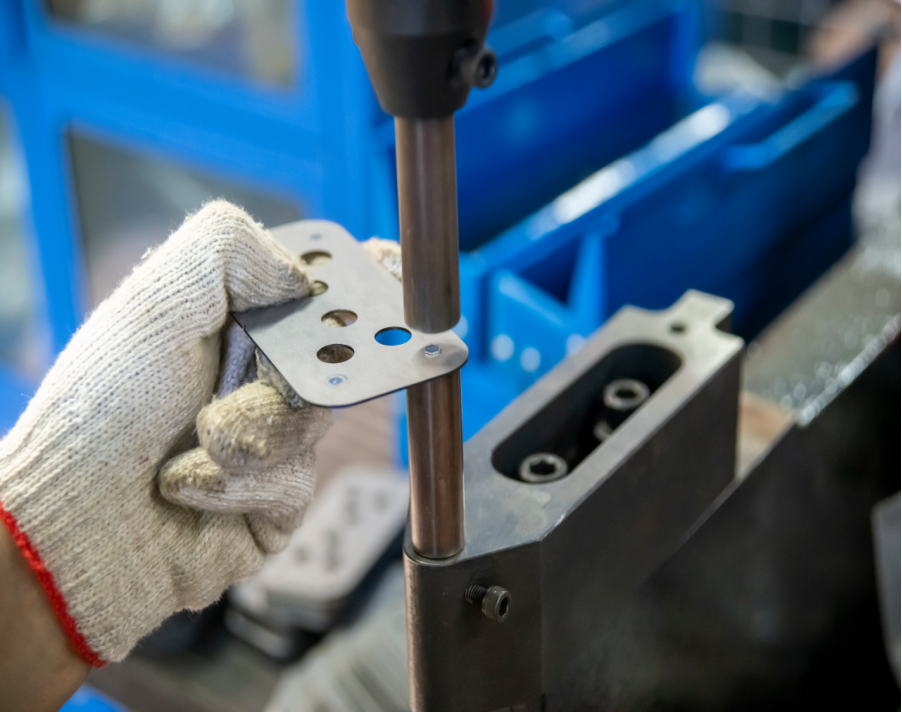
Many designers believe that creating complex geometries will not affect the manufacturing process. However, intricate designs can significantly impact both production time and costs.
Tooling Complexity: Complex shapes often require specialized tooling, which can slow down the fabrication process.
Increased Cost: Parts with intricate shapes usually demand more time and higher precision, leading to increased costs.
Manufacturing Time: The more complex the design, the longer it will take to fabricate and assemble.
Standardize parts whenever possible.
Use features such as slots, holes, and bends instead of complex cutouts.
Plan for future assembly and maintenance requirements.
A common design mistake is failing to account for assembly and post-fabrication processes when designing sheet metal parts. Assembly, welding, and finishing steps can add time and costs if not properly integrated into the design.
Assembly Constraints: Parts that are difficult to assemble or require complex welding may cause delays and additional costs during the post-fabrication phase.
Welding and Finishing: Some designs may require post-welding processing, such as grinding or surface treatment, which should be considered in the initial design.
Incorporate easy-to-assemble parts that minimize the number of fasteners or welds.
Allow for post-fabrication processes such as painting or coating.
Manufacturing tolerances play a crucial role in sheet metal fabrication. The mistake of neglecting or poorly defining tolerances can lead to parts that do not fit properly, affecting the final product’s functionality.
Tolerance Type | Effect on Fit | Effect on Manufacturing Cost | Common Applications |
Loose Tolerances | Easier fit, more errors | Lower cost, increased scrap | Large structural parts |
Tight Tolerances | Precision fit, high accuracy | Higher cost, longer production | Critical components |
Overly Tight Tolerances: Setting tolerances too tight can significantly increase production costs, as it requires more precise tools and additional quality control.
Loose Tolerances: On the other hand, overly loose tolerances can lead to poorly fitting parts and reduced performance.
Define tolerances based on the functionality of the part, the material being used, and the capabilities of the manufacturing process. This approach helps strike a balance between precision and cost-efficiency.
Surface finishing is an essential aspect of sheet metal fabrication that is often overlooked during the design phase. Different finishes such as powder coating, anodizing, or galvanizing can affect both the appearance and the function of the final product.
Impact on Performance: Surface finishes can influence corrosion resistance, friction, and wear properties.
Aesthetic Considerations: The finish of a part is also important for the visual appeal of the final product.
Consider the surface finish when selecting materials and planning for post-processing.
Choose finishes that complement the part’s intended use and environmental exposure.
Avoiding common design myths and mistakes in sheet metal fabrication can greatly improve production efficiency, reduce costs, and deliver better-quality products. At Dongguan Longwang Hardware Co., Ltd., we emphasize the importance of selecting the right materials, using proper bending radii, ensuring accurate hole placement, and considering assembly and finishing requirements from the outset. These strategies help streamline the design and production process while ensuring the final product meets all specifications and quality standards.
Good design is key to optimizing the entire fabrication workflow, and we are committed to helping you achieve that. If you want professional guidance, tailored solutions, or to learn how our expertise in sheet metal fabrication can support your next project, we invite you to contact us. Our experienced team is ready to work with you to turn your designs into precision-manufactured realities.
Q1: What materials are best for sheet metal fabrication?
The best materials depend on the application but commonly used materials include aluminum, stainless steel, and mild steel. Considerations like strength, weight, and corrosion resistance should influence the choice of material.
Q2: How do I select the correct bending radius for sheet metal?
The bending radius should be based on the material thickness and the material's bendability. A general rule is to choose a radius that is at least 3-4 times the material thickness.
Q3: Can I design parts without worrying about welding and assembly?
It is essential to consider welding and assembly early in the design process. Parts that are difficult to weld or assemble may increase production time and cost.
Q4: How can I improve sheet metal design efficiency?
Simplify the design by reducing the number of parts, using standard shapes and sizes, and ensuring that the design is easy to manufacture and assemble.


